You passed the exam. Your call sign showed up in the FCC database. Now you’re staring at a sea of radios with confusing model numbers, dubious Amazon listings, and forum threads where everyone has a different opinion about which $30 radio is secretly the best.
This is not that kind of guide.
This guide is for new Technician licensees — or people close to getting there — who want a working radio in their hands without overthinking it or overspending. We’re going to cover what actually matters in a first handheld transceiver (HT), walk through the real budget tiers with honest takes, and tell you exactly what we’d buy today if we were starting over.
No padding. No fake “top 10” lists stuffed with radios we’ve never touched. Let’s get into it.
What a First HT Actually Needs
You can spend hours reading about sensitivity specs and spurious emissions. For your first radio, ignore most of it. Here’s what genuinely matters:
Dual-band VHF/UHF. You want a radio that covers both 2 meters (144 MHz) and 70 centimeters (440 MHz). The vast majority of repeaters, nets, and local activity for new hams lives on these two bands. Any budget HT worth buying is dual-band — this is a baseline, not a feature.
Decent battery life. A radio that dies mid-event or on a hike is useless. Look for a radio that gives you a full day of casual use on a charge. Most budget HTs ship with a 1,800–2,100 mAh battery; that’s workable. Anything smaller starts to hurt.
CHIRP compatibility. CHIRP is free, open-source software that lets you program channels into your radio from a computer instead of suffering through the keypad menu system. Nearly every budget HT requires CHIRP to be practical. If a radio isn’t supported, it gets complicated fast. We’ll cover this more below.
A speaker loud enough to hear. Sounds obvious. It’s not. A few budget radios have genuinely poor audio output. You want to hear your radio clearly in a noisy environment — a parking lot, a trailhead, a public service event. This matters more than most specs.
That’s genuinely it for a first radio. Everything else is gravy.
The Budget Tiers
Here’s where the radios actually live, with honest assessments at each price point.
| Radio | Price Range | CHIRP Support | Best For |
|---|---|---|---|
| Baofeng UV-5R | $21–$25 | Excellent | Testing the water, go-bag backup |
| Radioddity GC5 | $35–$45 | Yes | First real radio, better build |
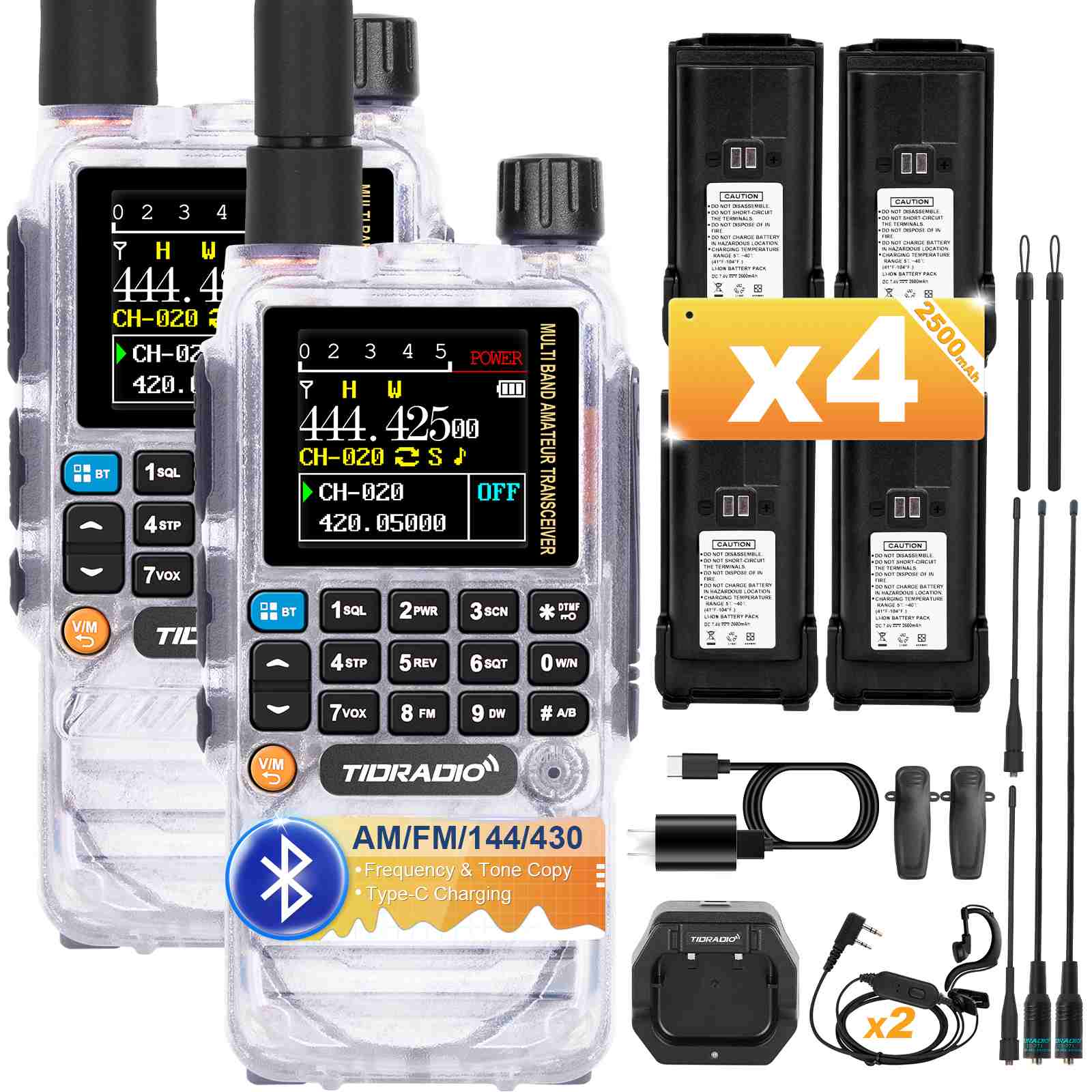
| Tidradio TD-H3 | $55–$75 | Growing | Best value new entry, strong RX |
| Retevis RA79 | $55–$75 | Yes | Solid all-rounder, cable included |
| Yaesu FT-60R | $100–$150 | Yes | Long-term radio, serious build |
Under $30 — Baofeng UV-5R (~$21–25)
See current deals on the Baofeng UV-5R
The UV-5R is the radio that introduced a generation of new hams to the hobby. There are millions of them in the wild. At $21–25, the entry barrier is basically zero.
Here’s the honest take: it works. The build quality is exactly what you’d expect from a $25 radio — it’s plastic, it feels light, and you wouldn’t trust it in a hard drop. But the radio itself transmits, receives, and gets you on the air. The community support is enormous: every problem you run into has been documented, every quirk has a workaround, and CHIRP support for the UV-5R is the most mature of any budget radio in existence.
If you’re deciding between the UV-5R and the Quansheng UV-K5 (which costs the same but adds wideband receive coverage from 18 MHz to 1.3 GHz), see our Quansheng UV-K5 vs Baofeng UV-5R comparison for a full breakdown.
The UV-5R’s RX sensitivity is acceptable but not impressive. The audio is passable. The menus are genuinely terrible without CHIRP. These are known limitations, not surprises.
Who it’s for: someone who wants to spend the least possible amount of money to get on the air and see if ham radio is actually their thing. Also a great option as a backup radio or emergency go-bag radio — something you throw in a bag and forget about until you need it.
Who it’s not for: someone who wants to feel good about their equipment. If the feel of the radio in your hand matters to you, spend a little more.
Under $50 — Radioddity GC5 (~$35–45)
See current deals on the Radioddity GC5
The GC5 is where you start to feel a legitimate step up from Baofeng tier. The chassis feels more solid, the buttons have better tactile feedback, and the audio output is noticeably cleaner and louder than the UV-5R.
Radioddity has invested in their customer support and documentation in a way that the original Baofeng brand never really has — that matters when you’re learning. CHIRP support is solid. Programming is straightforward.
For about $10–20 more than a UV-5R, the GC5 is a reasonable choice if you want a radio that feels more like a tool and less like a toy. It’s still a budget radio, but it’s a thoughtful one.
Under $80 — Tidradio TD-H3 (~$55–75)
See current deals on the Tidradio TD-H3
The TD-H3 is one of the more interesting radios to enter the budget market in the last couple of years. Tidradio has pushed meaningfully on receive sensitivity — one of the specs that actually affects day-to-day usability — and the TD-H3 shows it. You’ll pull in weaker signals more reliably than on either of the radios above.
The display is clean and easy to read. Build quality sits comfortably in the mid-tier. CHIRP support is still growing as the radio is newer to market, so check the current CHIRP compatibility before buying if that’s a hard requirement for you.
If you’re buying your first radio today and want to spend around $60–70, the TD-H3 deserves serious consideration.
Under $80 — Retevis RA79 (~$55–75)
See current deals on the Retevis RA79
The RA79 is Retevis’s answer to the mid-budget tier, and it’s a genuinely good radio. Build quality is solid, audio is among the better performers at this price range, and Retevis includes a programming cable in the box — which saves you the $8–12 you’d otherwise spend on the cable separately (and the cable is not optional if you want CHIRP).
CHIRP support is established and reliable. If you like buying from a single source and want everything you need to program the radio included out of the box, the RA79 is a convenient choice.
The TD-H3 and RA79 are close competitors. The TD-H3 has the edge on receive performance; the RA79 has the edge on the complete out-of-box experience. Either is a solid first radio.
$100–150 — Yaesu FT-60R (The Upgrade Path)
See current deals on the Yaesu FT-60R
If you stretch to the FT-60R, you leave the budget tier entirely and land in real-radio territory.
The FT-60R is built to a different standard than everything above it. The chassis is ruggedized. The weather resistance is legitimate — this radio handles rain, dust, and the kind of rough treatment that would kill a budget HT. The receive performance is excellent. Yaesu includes NOAA weather alert monitoring, which is genuinely useful for public service events, emergency communications, and outdoor use.
The FT-60R has been in production long enough that community support is deep and CHIRP compatibility is complete. It is the radio you buy once and use for ten years. Amateur radio operators who own one tend to keep it.
The tradeoff is real: at $120–140, you’re spending two to five times the cost of the UV-5R. For someone who isn’t sure yet if ham radio will stick, that’s a lot of money to commit upfront. For someone who already knows they’re in this for the long haul — emergency communications, public service events, regular use — the FT-60R is where the math makes sense.
The Programming Reality
Every budget HT on this list has a programming menu that will make you want to throw the radio into a lake. Don’t do that. Use CHIRP instead.
CHIRP is free, open-source software that lets you build your channel list on a computer — inputting repeater frequencies, tones, and names in a clean spreadsheet interface — and then upload the whole configuration to your radio at once. It supports hundreds of radio models and is the standard tool for programming budget HTs.
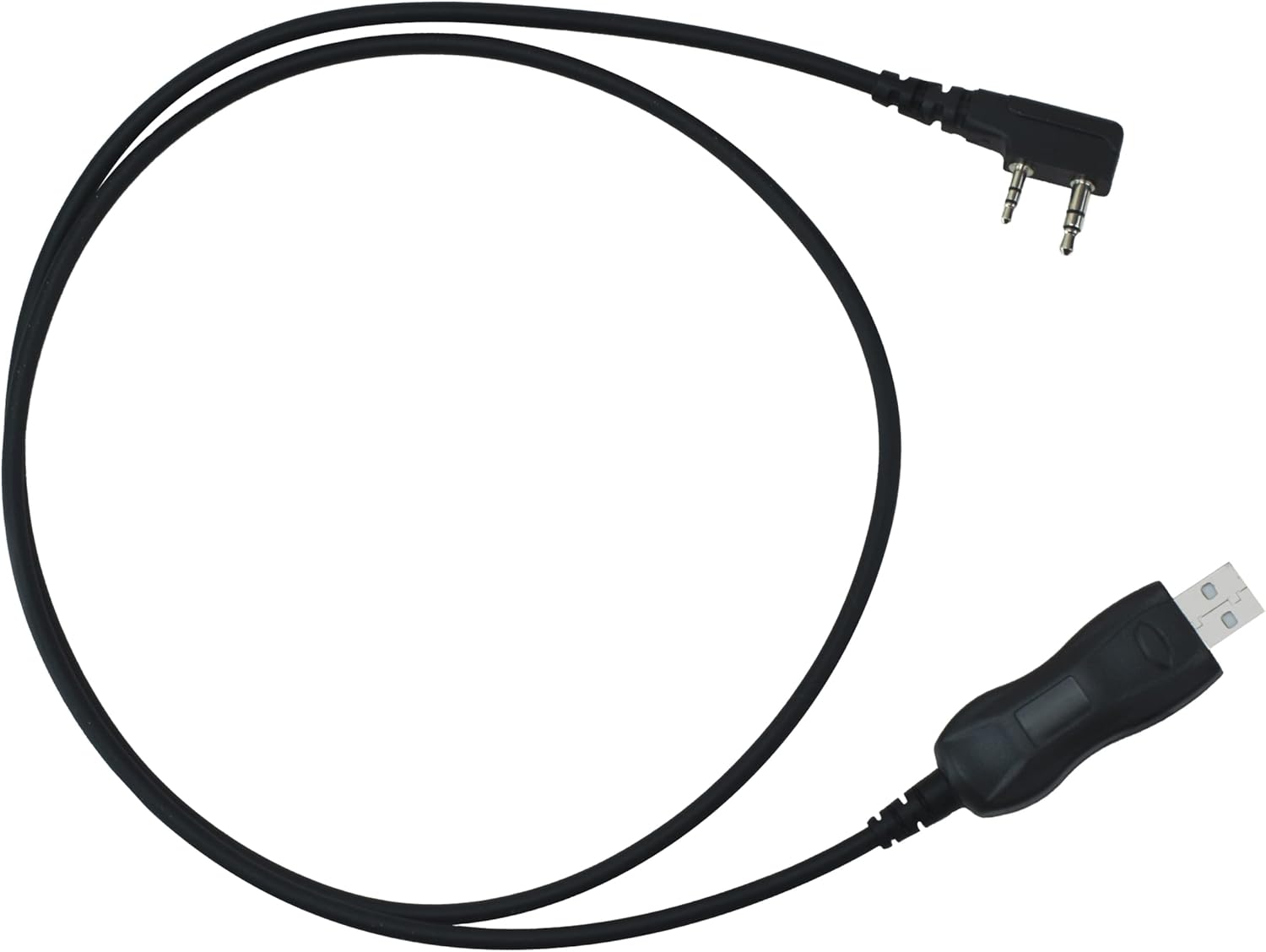
You will need a programming cable to connect your radio to your computer. Most budget radios use a Kenwood-style 2-pin connector. The cable itself is usually a few dollars, but quality matters — cheap no-name cables cause driver headaches. We’ll cover that in the accessories section.
Repeater frequencies for your area are available at RepeaterBook, which exports directly in CHIRP-compatible formats. Download the file for your region, open it in CHIRP, select the channels you want, and upload. That’s the workflow. It takes about 20 minutes the first time.
What You Actually Need Besides the Radio
The radio is just the start. Three accessories make a meaningful difference and none of them are expensive.
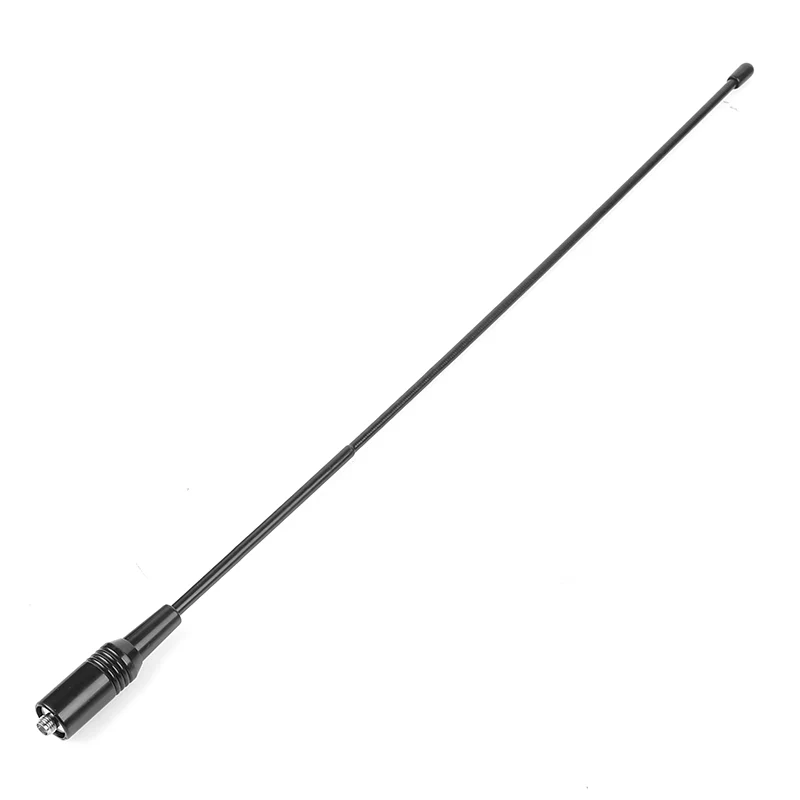
A better antenna. This is the single most impactful upgrade you can make to a budget HT. The stock rubber duck antennas that come with budget radios are mediocre at best. A Nagoya NA-771 costs around $12 and will noticeably improve both transmit range and receive sensitivity. The difference between a stock antenna and a quality aftermarket whip is larger than the difference between a $25 UV-5R and a $45 GC5. Buy the antenna. This is not optional advice.
A programming cable. To use CHIRP, you need a BTECH PC-03 USB programming cable. The BTECH cable uses a genuine FTDI chip, which means no driver nightmares on Windows or Mac. Cheap counterfeit cables use clone chips that frequently fail to install correctly and waste your afternoon. The BTECH cable is a few dollars more and worth every cent.
Extended battery (UV-5R owners). If you go with the UV-5R and find yourself running it heavily, the Baofeng BL-5L extended battery is a direct drop-in replacement that more than doubles runtime. It makes the radio noticeably heavier, but for field days, public service events, or emergency prep kits, the trade-off is worth it.
The Honest Bottom Line
If someone asked us today what to buy as their first ham radio, here’s the actual answer: get the Radioddity GC5, the Nagoya NA-771 antenna, and the BTECH PC-03 cable. That’s roughly $55–60 total.
The GC5 hits a sweet spot of build quality, audio performance, and community support that makes it the best first radio at its price. The antenna upgrade will immediately make you glad you spent the extra $12. The BTECH cable will save you from a programming cable nightmare on day one.
If your budget is truly constrained — like, genuinely $25-and-done constrained — then the Baofeng UV-5R is a legitimate radio that will get you on the air and teach you the hobby. Just manage your expectations on build quality and budget a few dollars for the antenna upgrade when you can.
If you already know you’re serious about emergency communications, ARES/RACES participation, or outdoor operation in rough conditions, skip the budget tier entirely and go straight to the Yaesu FT-60R. You’ll spend more upfront and never regret it.
What we wouldn’t do: spend $150 in incremental upgrades on budget radios trying to close the gap with the FT-60R. The gap doesn’t close. At that point, the math points to just buying the Yaesu.
Frequently Asked Questions: Budget Ham Radio HTs
Do I need a ham radio license to buy a handheld radio?
No license is required to purchase a handheld ham radio. However, you must hold an FCC Technician license (or higher) to legally transmit on amateur radio frequencies in the United States. You can legally listen and receive without a license. The Technician exam costs $15 and most people pass within a few weeks of self-study using free resources like HamStudy.org.
What is the best ham radio for a complete beginner under $50?
The Radioddity GC5 ($35–$45) is the best first HT for most beginners. It has a cleaner menu system than the Baofeng UV-5R, better out-of-box receive audio, and USB-C charging. Pair it with a Nagoya NA-771 antenna and a BTECH programming cable for a complete starter kit under $60.
Can I use a Baofeng UV-5R on GMRS or FRS frequencies?
No. The UV-5R is not FCC Part 95 certified for GMRS or FRS use. Transmitting on those frequencies with an uncertified radio is a violation of FCC rules. For ham radio repeater use on the 2-meter (144–148 MHz) and 70-centimeter (420–450 MHz) bands, the UV-5R is legal with a valid amateur license.
What is CHIRP and do I need it to program my handheld radio?
CHIRP is free, open-source software that lets you program channels into most handheld radios from your computer rather than through the radio’s keypad. It is not strictly required — you can enter channels manually — but for programming local repeaters or saving preset configurations, CHIRP makes the process significantly faster. It supports the Baofeng UV-5R, Radioddity GC5, Yaesu FT-60R, and most other budget HTs.
Is the Yaesu FT-60R worth the extra cost over a Baofeng?
Yes, for operators who plan to use their radio in public service, emergency communications (EMCOMM), or ARES/RACES work. The FT-60R passes Military Standard 810 environmental testing, has superior receiver selectivity, and NOAA weather alert monitoring. For pure first-radio experimentation where you’re not sure if ham radio will stick, the budget options perform the core function at a fraction of the cost.
Stay Ahead of Price Drops
Budget radio prices move constantly — the UV-5R in particular swings by $5–8 depending on the week and the seller. The best time to buy is when a deal surfaces, not when you’ve already decided you need a radio right now.
Subscribe to HamDeals price alerts and we’ll notify you when the radios on this list drop to their best prices. No spam — just a heads-up when it matters. Set your alert, buy at the right time, and get on the air.
73 de HamDeals