This fall, governments in the UK, Japan, the EU, and the US all delivered the same message within weeks of each other: your household should be able to cope on its own for at least 72 hours. The kit lists are everywhere now. Water, food, batteries, a radio.
What none of the campaigns hand you is the plan for that radio. A handheld in a drawer is not a communications plan. Which channel? Who calls whom, at what time, and what happens when the first method fails? Emergency communicators settled these questions decades ago with a framework called PACE: Primary, Alternate, Contingency, Emergency. Four layers, each one failing for different reasons than the layer before it.
Here is how a family fills all four layers without a ham license, what the gear costs at current prices, and a free tool that turns it into a printed comms card tonight.
The four layers, in plain terms
Primary: the phones. Group text, short messages, one out of area contact as the hub. Text outlasts voice in a degrading network, and a message leaving the disaster area often gets through when local calls do not. This layer is free and already in everyone’s pocket. It is also the first to go.
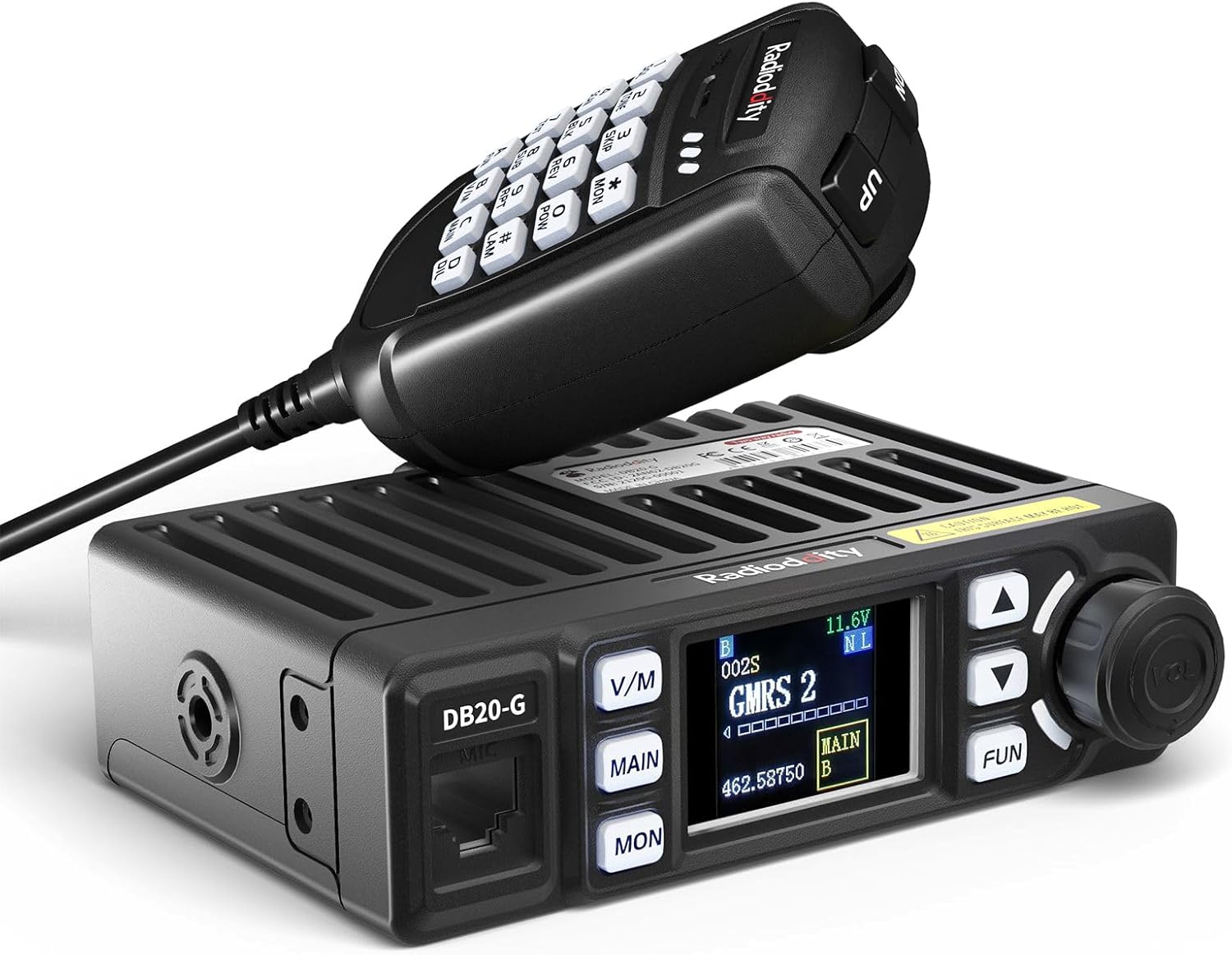
Alternate: GMRS handhelds. GMRS is the layer most families should build first. One $35 FCC license covers the whole immediate family for ten years, no exam. Handhelds like the Baofeng UV-5G Plus run about the cost of a pizza night, and a mobile like the Radioddity DB20-G in the family vehicle stretches range to miles instead of blocks. Same channel in every radio, programmed on a calm day, not during the storm.
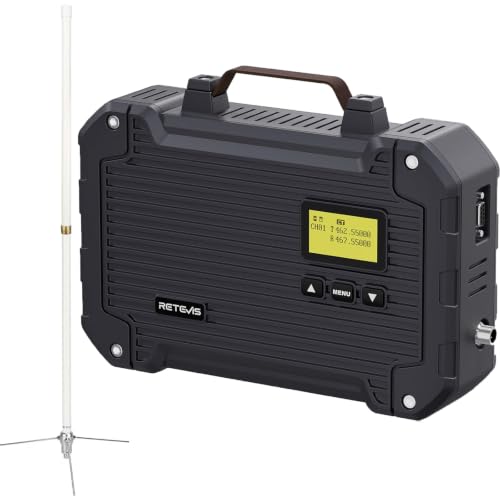
Contingency: a path that ignores local infrastructure. A GMRS repeater on high ground, like the Retevis RT97L, can cover a whole neighborhood. A Meshtastic mesh does the same job with text instead of voice and needs no license at all (our Meshtastic starter kit guide builds one from about $20). The point of this layer is independence: it shares no failure mode with the phones or the handhelds’ direct range.
Emergency: a place and a time. Not a device. A rally point near home, one outside the neighborhood, and a household rule: no contact by the hour mark means be at the rally point on the hour. This layer never runs out of battery.
Beside each layer, write the switch trigger. “If texts have not gone through for 15 minutes, we are on GMRS channel 17” ends the debate in the moment that matters.
The habit that makes it real
A plan in a binder is a hypothesis. The groups that communicate well in real events share one habit: a standing weekly check. Same channel, same time, five minutes on a Sunday. Call the group on Primary, anyone missed tries Alternate, and write down who made contact and how. The gaps show up in week two, on a calm day, which is exactly when you want to find them. Radios with dead batteries, a kid who does not know the channel, a backup layer that has never once worked: the weekly check finds all of it while it is still free to fix.
Build your plan in five minutes
Our sister project CommsUp built a free PACE plan generator that walks through the four layers, starts from sample plans for a family, a traveler, and a rural household, and flags the classic mistakes, like a Primary and Alternate that secretly depend on the same cell network. It prints a comms card in the style of the ICS-205 form emergency managers use, ready for the fridge door and the go bag. Two companion guides go deeper: writing the family emergency communication plan and what still works when cell phones go down.
If you act on the rest of the plan, CommsUp also turns it into a standing weekly check with a reminder to every member and a running drill record, free for families and small groups. Full disclosure: CommsUp and HamDeals are run by the same small team, which is why the generator is free and why we are comfortable pointing you at it.
Governments have done their part this fall. They sold the kit. The plan, and the five minute Sunday test, are ours to run.
A Black Friday 2026 note for families
Added November 13, 2026. If sale week has you shopping for family radios, the honest line from our Black Friday 2026 page applies: ham handhelds are not legal FRS or GMRS radios, and transmitting on ham bands needs a license. For a family gift, the do not guess section of the 2026 gift guide gives the family comms answer first, then the hobby starter path for anyone studying for a license.